9 AM to 7 PM Monday-Saturday
+91-9251896140 (Sales)
+91-9251896143 (Technical)
+91-9166273732(HR)/hr@raynas.co.in

Best Scan to BIM Company in Mumbai Laser Scanning,Point Cloud Processing,Information Embedding
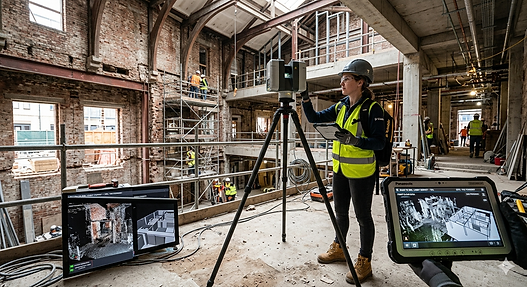
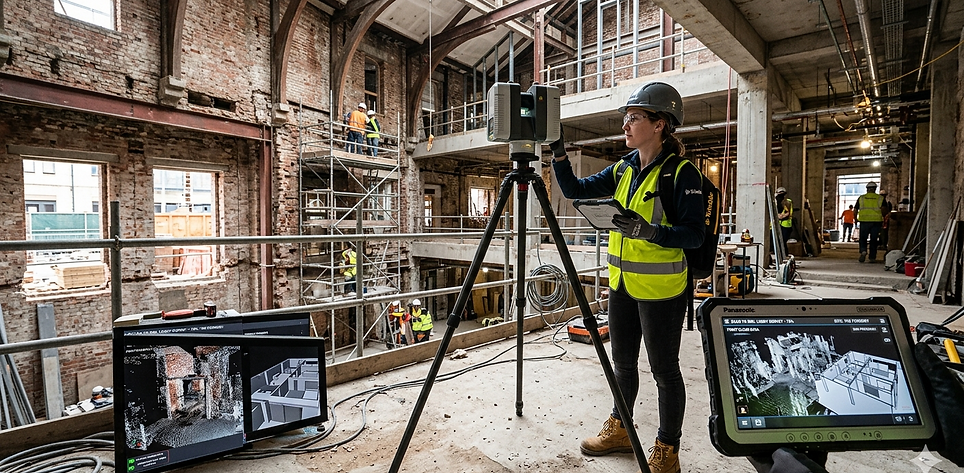
Scan to BIM is a transformative process in the construction and architectural industry, bridging the gap between physical structures and digital models. It begins with laser scanning or LiDAR technology, which captures millions of data points from an existing building or site. These points form a “point cloud,” a highly detailed digital representation of the structure. The point cloud is then processed and converted into a Building Information Model (BIM), which is intelligent, data-rich, and usable across multiple disciplines. This process is particularly valuable when original drawings are outdated, missing, or inaccurate. By creating precise as-built documentation, Scan to BIM companies enable architects, engineers, and contractors to work with confidence, reducing errors and improving project efficiency. Ultimately, Scan to BIM provides a foundation for smarter design, renovation, and facility management, making it indispensable in modern construction workflows.
The methods employed by Scan to BIM companies are both technical and systematic. The process typically starts with laser scanning or photogrammetry, where specialized equipment captures the geometry of a building in three dimensions. The raw data is then cleaned, aligned, and registered to form a unified point cloud. Using software such as Autodesk ReCap or Faro Scene, this dataset is prepared for BIM conversion. Once imported into platforms like Autodesk Revit, the modeling team creates architectural, structural, and MEP elements with varying Levels of Detail (LOD 100–500). Metadata such as material type, dimensions, and maintenance schedules are embedded into each element, making the model not just a geometric representation but a comprehensive digital asset. Quality control is performed to ensure compliance with standards like ISO 19650, guaranteeing accuracy and usability. These methods ensure that the final BIM model is both precise and practical.
The applications of Scan to BIM are vast and extend across multiple industries. In construction, it is used to generate accurate as-built documentation, which is critical for renovation, retrofitting, or expansion projects. Facility managers rely on BIM models enriched with lifecycle data to maintain and operate buildings efficiently. In heritage conservation, Scan to BIM enables digital preservation of historic sites, ensuring that even the smallest architectural details are archived for restoration. MEP engineers use it to map complex systems like HVAC, plumbing, and electrical layouts, reducing clashes during upgrades. Urban planners and smart city developers integrate Scan to BIM with digital twin technology to monitor infrastructure in real time. Even in healthcare and education, institutions use BIM models for space optimization and safety compliance. These diverse applications highlight how Scan to BIM is not just a tool but a strategic enabler of modern infrastructure management.
Best Scan to BIM Company in Mumbai, Maharashtra | RAYNAS GEOMATICS
Best Scan to BIM Company in Mumbai, Maharashtra.Accurate As-Built Documentation,Improves Efficiency LiDAR Scanning,Digital Twin Integration,As-Built Documentation,Photogrammetry
Best Scan to BIM Company in Mumbai, Maharashtra.|Laser Scanning,Point Cloud Processing,Information Embedding
The benefits of Scan to BIM are both immediate and long-term. One of the most significant advantages is accuracy, as laser scanning eliminates guesswork by capturing exact dimensions of existing structures. This precision reduces costly errors and rework during construction or renovation. Efficiency is another key benefit, with project turnaround times reduced by up to 70% compared to traditional methods. Collaboration improves dramatically, as architects, engineers, and contractors can work on a shared BIM model, ensuring better coordination and fewer conflicts. Lifecycle value is enhanced because BIM models embed data that supports facility management, predictive maintenance, and sustainability initiatives. Additionally, Scan to BIM contributes to heritage preservation by digitally archiving historic buildings. Overall, the process saves time, reduces costs, and improves project outcomes, making it a cornerstone of modern construction and asset management practices.